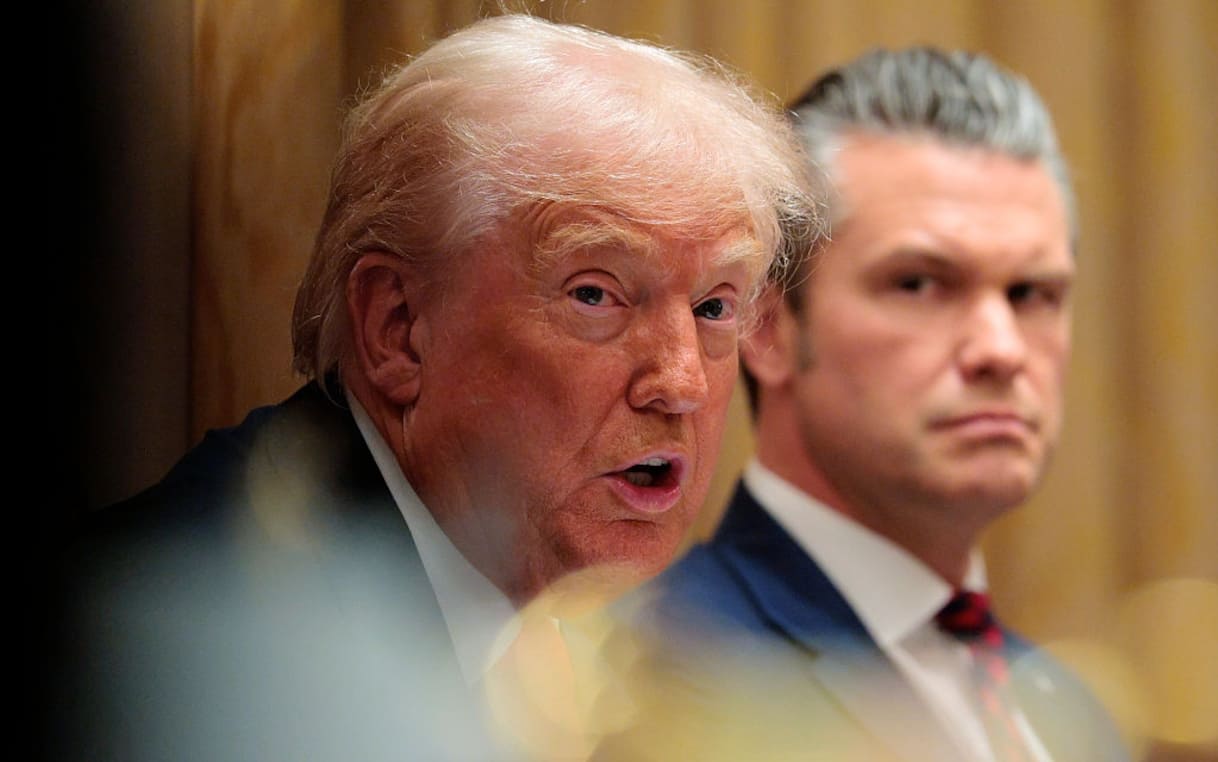
American voters have handed control of both chambers of Congress to the Democrats in the 2026 midterm elections, a result that President Donald Trump acknowledged as a defeat while disputing the reasons for it. According to Sky TG24, the House could vote as early as next week on impeaching Defense Secretary Pete Hegseth. The outcome, reported across Italian outlets including la Repubblica, Corriere della Sera and ANSA, redraws the political map from Texas to Kansas and opens an immediate fight inside the Republican Party over the war with Iran.
Why it matters
A president losing both houses of Congress midway through his term strips him of his legislative shield and hands the opposition subpoena power, committee chairs and the ability to block nominations. Sky TG24 describes the result as the "blue wave" Trump feared arriving as a tsunami, with the entire Congress now in Democratic hands. The scale of the losses in states long considered Republican fortresses suggests the damage went well beyond a normal midterm swing, and the party's internal recriminations began within hours.
Red strongholds fall
Democrats overturned decades of Republican dominance in several states. In Texas, James Talarico won a Senate seat and Gina Hinojosa unseated incumbent Governor Greg Abbott, according to la Repubblica. Josh Turek took Iowa, and Adam Hamilton won Kansas, where no Democratic senator had been elected since 1932. In Maine, Troy Jackson defeated veteran Republican Susan Collins. Jon Ossoff was returned in Georgia and, should he choose to run, would enter the 2028 presidential race in a strong position. Michigan elected Abdul El-Sayed, a Muslim physician backed by Barack Obama. Keisha Lance Bottoms became the first African American woman to lead Georgia after more than two decades of Republican control there, and Democrats also took several governorships.
Voting blocs that had drifted toward the Republicans moved sharply the other way. La Repubblica reports that under-30s, Latino voters and women turned their backs on the party.
Trump concedes, then threatens vetoes
Trump accepted the result but rejected the explanation that the Iran war cost him the election. According to ANSA, he argued the party lost over the cost of living rather than the conflict. Sky TG24 reports that he returned quickly to threats of repeated vetoes, a signal that he intends to fight the Democratic Congress rather than accommodate it.
The internal blame game started at the top. Vice President JD Vance publicly separated himself from the president's position, telling supporters that the party had lost because of the war in Iran, la Repubblica and Il Sole 24 Ore report. In a 614-word post, Vance set out four priorities for winning voters back: ending the war, focusing on the cost of living and inflation, putting America first, and changing the country's relationship with Israel. Fox News, cited in the Sky TG24 coverage, reports that Vance is already working on what it calls a "new right" after the Republican defeat.
His remarks drew a sharp response from Tehran. Iran's parliamentary speaker, Mohammed Bagher Ghalibaf, attacked Vance on X, calling him a losing gambler who cannot leave the table and accusing Washington of preparing the next phase of the war while America teeters because it put Israel first. Ghalibaf also asked why Vance did not raise his objections directly with his boss.
Iranians took to the streets to celebrate the American election result, Corriere della Sera reports, but Supreme Leader Ali Khamenei struck a cautious note, saying that America does not change. The paper also notes an opening from Beijing.
Hegseth under pressure, Rubio succession talk
The Defense Secretary is the most immediate target of the new Congress. Sky TG24 reports that a House vote to impeach Hegseth could come as soon as next week.
At the State Department, the Washington Sun reports speculation among department officials and Republican political circles that Secretary of State Marco Rubio may step down to prepare a presidential run in 2028 or 2032. Rubio has given no public indication that he plans to leave the administration. Sergio Gor, the US ambassador to India and special envoy for South and Central Asia, has been mentioned as a possible successor. Gor denied any interest in another post or any discussion of one, calling Rubio the most qualified secretary of state in history and a close friend. State Department spokesman Dylan Johnson dismissed the report as invented by anonymous sources, and a White House official called the article false. Any replacement at the top of the diplomatic service would need Senate confirmation, and the Senate is now under Democratic control; every Democratic senator voted against the nominations package that included Gor's ambassadorship.
Reaction abroad was measured. Italy's minister for European affairs, Pnrr and cohesion policy, Tommaso Foti, said in Catania that relations with the US government would continue, noting that no one, including the European Union in its highest-level statements, believes ties should be broken. He added that the vote was an internal American matter that US politicians would legitimately assess for its effects on Congress. Foti also said that Trump's forceful approach on the geopolitical stage does not currently appear to enjoy the support of most Americans.
First Lady Melania Trump is due to speak in Washington on Ukraine, Sky TG24 reports.
The next test comes quickly: watch whether the House schedules the Hegseth impeachment vote, and whether Trump's veto threats turn into an actual governing strategy or a rearguard action against a Congress he no longer controls.